The International Kajukenbo Association (IKA) traces its lineage to the founding of the
martial art of Kajukenbo. In the fall of 1947, Frank Ordonez invited Adriano Emperado to
train with him, Joseph Holck, Peter Choo, and George “Clarence” Chang at Choo’s
family home in the Damon Tract housing development of Honolulu, Hawaii. Initially, the
training consisted of the five men comparing their various skill levels and martial arts
styles against each other. Choo then came up with the idea of working together to
create techniques that could be used in the street against a trained fighter or a criminal
with a knife or club.
At that point the group established an organization of their own that they called the
Black Belt Society and over the next two years trained at an abandoned military
barracks located at Halawa Veterans Housing where they combined their collective
knowledge of karate, judo, jujitsu, kenpo, and boxing (Western and Chinese styles) to
create a series of street-based self-defense techniques. Once the techniques were
finished the group realized that they had created a martial arts style of their own. Holck
then took the letters KA for karate, JU for judo and jujitsu, KEN for kenpo, and BO for
boxing and created the name KA-JU-KEN-BO.
While most references about Kajukenbo assign one specific art to each founder the
reality is Emperado, Holck, Choo, and Ordonez all cross-trained in jujitsu, kenpo, and
boxing before they began to train together. Chang was the only founder who trained in
one specific art. He was a student of famed teacher Wong Kook Fat and learned a
hybrid style of Chinese boxing (kung fu).
In 1949, the founders disbanded due to military commitments, but Emperado continued
to teach the techniques the founders created along with the Kenpo Jiu-Jitsu that he was
learning from William Chow. Emperado’s classes were held at Halawa Veterans
Housing, and the students included his brother Joe Emperado, Marino Tiwanak, Vernon
Chong, Walter Lee, Ben Lau, Stanley Machida, and a few others.
In 1950, Emperado moved his students from Halawa to the Palama Settlement gym
where he began teaching classes. His brother Joe served as his assistant. It appears at
that time Emperado may have been sharing mat space with other instructors because
records from the Palama Settlement show Emperado did not become a formal kenpo
instructor at Palama Settlement until May of 1952.
While the Emperado brothers taught their classes at Palama Settlement they also
continued to train in the art of Kenpo Jiu-Jitsu under William Chow. At that time, the
Emperado brothers taught their students the Kajukenbo techniques created by the
founders and the martial art of Kenpo Jiu-Jitsu as taught to them by Chow.
It’s important to note the Emperado brothers did not use the Kajukenbo name. Instead, just like Chow they called their art Kenpo Jiu-Jitsu. Together, the Emperado brothers added techniques to the Kajukenbo curriculum and created 14 martial arts forms which they initially called Pinans. In 1993, Emperado changed the name of the forms to Palama
Sets to better reflect where the forms were created.
In 1957, Adriano Emperado publicly established the Kajukenbo Self-Defense Institute
as the name of his martial arts organization and formally changed the name of his
martial arts style from Kenpo Jiu-Jitsu to Kajukenbo. While the founders established the
Kajukenbo name in the 1940s, this 1957 introduction was the first public use of the
Kajukenbo name. Sadly, Joe Emperado passed on May 30, 1958, just a few months
after the formal announcement and did not get to see the growth of Kajukenbo.
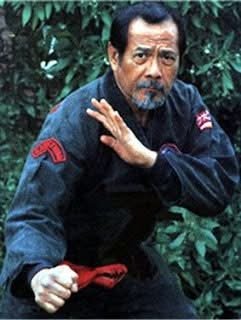
In the 1960s, Adriano Emperado, Al Dela Cruz, and Al Dacascos began incorporating
various Chinese martial arts styles into the Kajukenbo curriculum and in doing so
created Kajukenbo Tum Pai and Kajukenbo Ch’uan Fa. In 1966, the Kajukenbo
Association of America (KAA) unified efforts but faced internal politics over hard vs. soft
styles and geographic limits. In 1969, Al Dacascos and Al Reyes broke away to
establish the IKA, prioritizing global expansion and preserving Kajukenbo’s multicultural
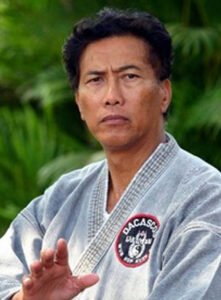
fusion. Today, under President Great Grand Master Al Dacascos—a Hall of Fame
inductee and WHKD founder.
Source: International Kajukenbo Association Historian Mitch Powell